How to Predator-Proof a Chicken Coop in Georgia
A safe coop is mostly small gaps, honest hardware and one good habit at dusk.
October 8, 2026 · 4 min read
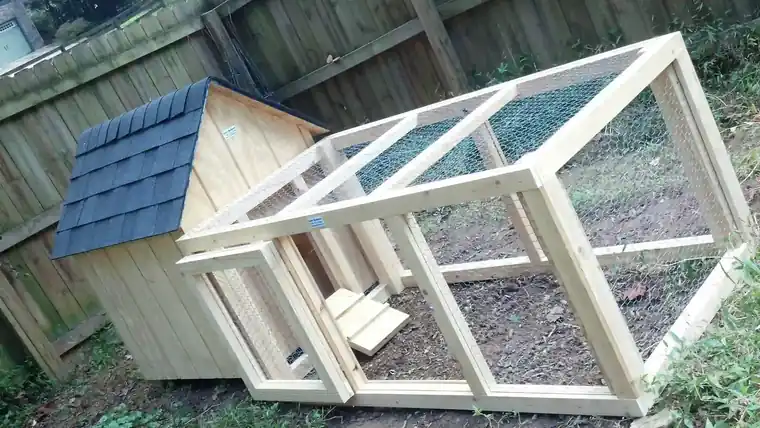
Most folks lose their first chicken the same way. The coop looked fine at dusk, the door was shut, and by morning something had found the one spot nobody thought to check. Predators are patient, and they're good at their jobs. Your job is to leave them nothing to work with.
Backyard flocks across Georgia and the Carolinas get plenty of attention from wildlife. Here are the weak spots we hear about most, and how to close them up.
Know who you're up against
Different animals break in different ways, so it helps to think about each one. Raccoons use their hands. They'll work a simple hook or slide bolt open, reach through wire, and pull a bird right up against the mesh. Foxes, coyotes and loose dogs dig and push. Snakes and weasels can flatten themselves to get through gaps smaller than you'd guess, and they go after eggs and chicks. Hawks hunt in daylight and owls after dark, and both come from above.
Once you know the list, walk your coop and ask a plain question at every seam, hinge and vent: could any of these animals get a paw, a nose or a body through here? If the answer is maybe, fix it.
Use the right wire, and stop the diggers
Chicken wire keeps chickens in. It does a poor job keeping predators out. The thin hexagonal mesh bends under a determined raccoon and tears under a dog. For anything that protects the birds, use welded wire or hardware cloth, the stiff square mesh with small openings. Small openings matter because a young snake or a weasel will slip through a gap bigger than you'd expect.
Fasten it properly, too. Staples alone pull out over time. Use screws with washers, or heavy fence staples set close together, and overlap sections. Wire is only as strong as the way it's attached.
Anything that can dig, will. A run set directly on bare dirt is an open invitation. The usual fix is an apron: lay hardware cloth flat on the ground, reaching outward from the base of the run, and anchor it down. An animal that starts digging at the fence line hits wire instead of dirt, and that tends to discourage it.
If the ground allows, you can also bury the wire a foot or so down along the edge. Either way, the goal is the same. The bottom edge of your run should never be the easiest way in.
Doors, latches and the nesting box
Latches fail more than anything else. A simple hook and eye is fine for a gate that keeps a puppy out of the garden. It's not fine against a raccoon. Use a latch that takes two separate motions to open, like a spring clip on a slide bolt, and put one on every opening, including the small pop door and the nesting box lid.
Nesting boxes deserve their own look. They're a hole in the wall by design, and they're where the eggs are. Easy outside access is a real convenience, because you can gather eggs without stepping into the run. It should also close tight. Check that the lid sits flat, the hinges aren't loose, and the latch catches every time. A box you reach from outside is only a good idea if it locks like a door.
Roof, vents and floor
Predators that can't dig or open anything will look up. A covered run keeps hawks off, and wire across the top beats open sky. Chickens need fresh air, so vents are necessary, but cover every vent opening with hardware cloth. Gaps under the eaves are easy to overlook.
The floor matters as much as the walls. Wet bedding and droppings are hard on wood, and a floor that soaks up moisture will soften and eventually rot, which hands a predator a weak panel to chew through. Raising a coop off the ground on treated legs helps keep it dry underneath. A solid, dry structure is a big part of a safe one.
Build a closing-up routine
Even a good coop only works if it's shut. Predators learn your schedule, so closing the birds in at dusk every single night, not most nights, is the habit that counts. Chickens head for the roost on their own as the light fades, which makes it easy. Wait until they're all inside, count heads, and latch up. Here's a short walk-through to run each evening:
- Count the birds and make sure every one is inside before you close up.
- Check that each door, pop door and nesting box lid is latched with a two-step latch.
- Run your hand along the wire edges and the bottom of the run, feeling for loose staples or bent spots.
- Look for fresh digging along the fence line and fill it in right away.
- Pick up spilled feed, since it draws rodents and the animals that hunt them.
If you see tracks, scratches or disturbed dirt, take it seriously. An animal that tested your coop once will usually come back.
Start with a coop built to last
A tight coop starts with sturdy materials. Clark's Woodwork builds chicken coops with easy-access nesting boxes and runs, an Advantex floor that carries a 50-year manufacturer warranty, and asphalt shingle roofs with a 20-year warranty. The family has been at this for over 44 years. If you'd like to talk through a coop or a run for your yard, call (706) 372-6294, or ask about us at a dealer near you in Georgia, South Carolina or North Carolina.
Clark's Woodwork, (706) 372-6294
Call (706) 372-6294