Why Pressure-Treated Wood Matters for Your Porch Swing
A swing is only as good as the wood and hardware holding you up.
October 8, 2026 · 4 min read
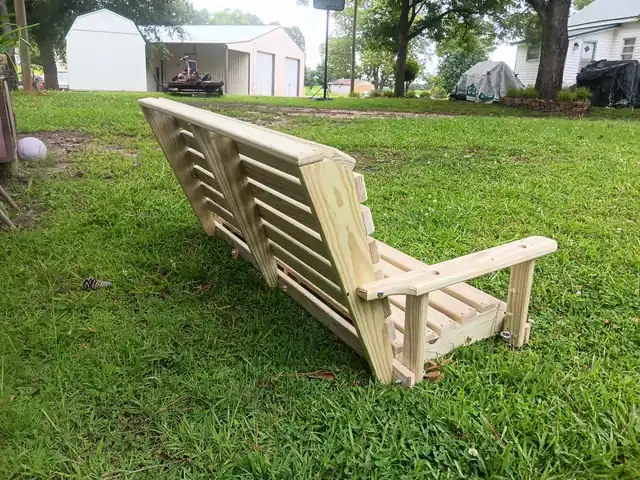
There's nothing like an evening on a porch swing. Cool drink, a little breeze, the sound of the chains creaking just right. What you don't think about while you're sitting there is the wood under you, which is quietly holding your weight, the weather and a few hundred swings a month.
That's a lot to ask of lumber. If you're picking out a swing, or deciding whether yours has another season left in it, it helps to understand what actually makes outdoor wood last.
What moisture does to wood
Wood is a bundle of tiny fibers, and water is its enemy. When wood gets wet, it swells. When it dries, it shrinks. Do that over and over, season after season, and the boards crack, cup and pull away from their fasteners. Meanwhile, anything that stays damp becomes a home for the fungi that cause rot, and rot turns solid boards into something you can push a screwdriver through.
In the Southeast, we get hot sun, humid air and frequent rain, often in the same afternoon. A porch roof keeps off the worst of it, but it doesn't stop blowing rain, morning dew or the humidity that settles into everything. Outdoor wood here is always dealing with moisture, even when it looks dry.
What pressure treating actually does
Painting or sealing a board protects the surface. Pressure treating works from the inside. The lumber is placed in a sealed chamber, and a preservative is forced deep into the wood fibers under pressure. That preservative makes the wood much less appealing to rot and insects, and it keeps working even where the surface gets scratched or worn.
That's why you see treated lumber used for decks, fences, posts and anything else that touches the weather or the ground. It's not magic, and it won't last forever without care, but it gives the wood a head start that untreated lumber can't match.
Where swings fail first
A swing is a moving piece of furniture, so it fails in specific places. Knowing them tells you what to look at before you buy or sit down.
- The joints, where arms, back and seat meet. Water gets into end grain here and sits.
- The seat slats, especially where they're flat and rain pools on them.
- The spots where chains or ropes attach, since every swing of the seat puts force on those few inches of wood.
- The bottom edges and feet of any part that touches a floor or wet ground.
Those spots take moisture and stress together, and that's the combination that breaks wood down fastest. Wood that has been treated all the way through has a better chance in every one of them.
The hardware matters just as much
Good wood held together by cheap hardware is still a cheap swing. Look for coated or galvanized screws, bolts and hangers, because plain steel rusts quickly in damp air and stains the wood around it. The chain and hooks matter most of all. They're the only thing between you and the porch floor, so check them every season for rust, stretching or a hook that has started to open.
Fasteners should also go in cleanly. Pre-drilled holes keep boards from splitting, and a split near a joint lets water straight into the core of the board.
Keeping a swing in good shape
Even the best wood does better with a little attention. Wipe off leaves and debris that hold moisture against the boards. Re-tighten bolts at the start of each season, since swinging works them loose. If you use a stain or sealer, follow the directions on the can and the advice of the place that sold you the lumber, because new treated wood can hold a good deal of moisture and may need time to dry first.
If you can, keep the swing out of standing water and away from sprinklers, and give the underside of the seat a look now and then. That's the part you'll never see from the porch.
Questions to ask before you buy
When you're shopping for a swing, ask what kind of lumber it's made from, what the fasteners are, and how the joints are put together. A builder who's proud of the work will answer plainly. Clark's Woodwork builds high-back swings from top-choice lumber, made to hold up for years, and our Union series picnic tables are 100% pressure-treated lumber. Barry and the family have been working with wood for over 44 years, and we're happy to talk about what goes into a piece. Call (706) 372-6294, or look for our swings at one of our dealers around Georgia and the Carolinas.
Clark's Woodwork, (706) 372-6294
Call (706) 372-6294