Keeping Outdoor Cats Warm in a Georgia Winter
A good cat shelter is small, dry and out of the wind, and it takes only a few choices to get there.
October 8, 2026 · 4 min read
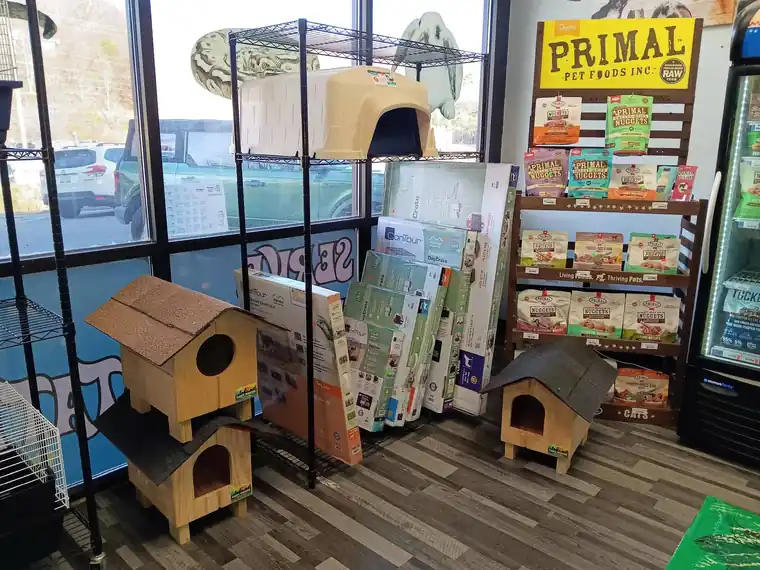
Georgia winters can fool you. One week it's sweater weather and the next you wake up to a hard frost on the truck windshield. If you've got barn cats, porch cats or a neighborhood stray you've started feeding, those cold mornings are a good reason to give them a proper place to get out of the weather.
A shelter doesn't have to be fancy. It has to do three things well: stay dry, block the wind, and hold a cat's own warmth. Here's how to get all three.
Small beats big
Cats want a space that's just big enough to turn around in and curl up. That's the opposite of what most people expect, because we tend to picture a roomy cabin. A large, open interior is hard to keep warm, since there's more air for a small animal to heat. A snug house traps body heat and stays cozier with nothing else added.
Our Large Cat House is a good example of the idea. It measures 15 1/2 inches deep, 11 inches wide and 14 3/4 inches tall, with a 10 inch door opening. That's room for a cat to settle in comfortably without leaving a lot of empty space around it.
Get it off the ground
Cold and damp creep up from the earth. A shelter sitting flat on dirt, grass or concrete will pull chill and moisture into the floor, and then into the bedding. Raise it a few inches on legs, blocks or a pallet so air can move underneath and the floor stays dry.
This helps the house last, too. Wood that stays dry holds up far longer. The legs on our cat houses are pressure-treated, so the part that sits closest to the ground is the part built to handle moisture.
Block the wind with the door
Wind does most of the damage on a cold night, because it pulls warmth out of any space it can reach. The door is the place to start. A door facing straight into the wind turns the house into a funnel. An offset door, set to one side instead of dead center, keeps the wind from blowing right through to the bedding, and an awning over it helps keep rain and sleet out.
That's how we design our cat houses: a 5/8 inch T1-11 exterior siding body, a 3/4 inch Advantex floor with a 50-year manufacturer warranty, a 7/16 inch OSB roof under shingles with a 20-year warranty, and an awning with an offset door. You can add your own fixes to any shelter, but it's easier when the basics are already built in.
Pick the right bedding
What you put inside matters nearly as much as the house. Soft blankets and towels feel cozy to us, but once they get damp, they stay damp, and a wet bed pulls heat away from a cat instead of holding it in. Many people who care for outdoor cats prefer straw, which sheds moisture and doesn't mat down the same way. Hay is different from straw and tends to hold moisture and mold, so ask at your feed store which one you're getting.
Whatever you choose, check it often. Fluff it up, pull out anything that's gotten wet, and replace it as needed. Dry bedding is a small chore that makes a real difference.
Where you put the house
Location is free, and it counts. Set the shelter against a wall, a barn or a fence so the back and one side are protected. Face the door away from the direction your cold wind usually comes from. A covered porch, a carport or the side of a shed all work well, as long as the house itself stays out of puddles and runoff.
Keep it somewhere the cat already feels safe. Cats like to see who's coming without being out in the open, so a spot with a little cover nearby usually gets used faster than one in the middle of the yard.
A cat that's unsure about a new house will often ignore it for a few days. Put a little familiar bedding inside, leave the door in an obvious place, and give it time. Feeding nearby, but not right at the entrance, can help the cat connect the spot with comfort.
If you've got several cats, think about more than one shelter. Cats often prefer their own space, and a second house gives the group choices.
A house built for it
Clark's Woodwork takes the same durable designs we use for dog houses and makes them kitty-friendly. The Large Cat House has a suggested retail of $109.95, and you can find our houses at dealers across Georgia, South Carolina and North Carolina. For questions about a cat house or a custom size, call us at (706) 372-6294. Barry will be glad to talk it through.
Clark's Woodwork, (706) 372-6294
Call (706) 372-6294